
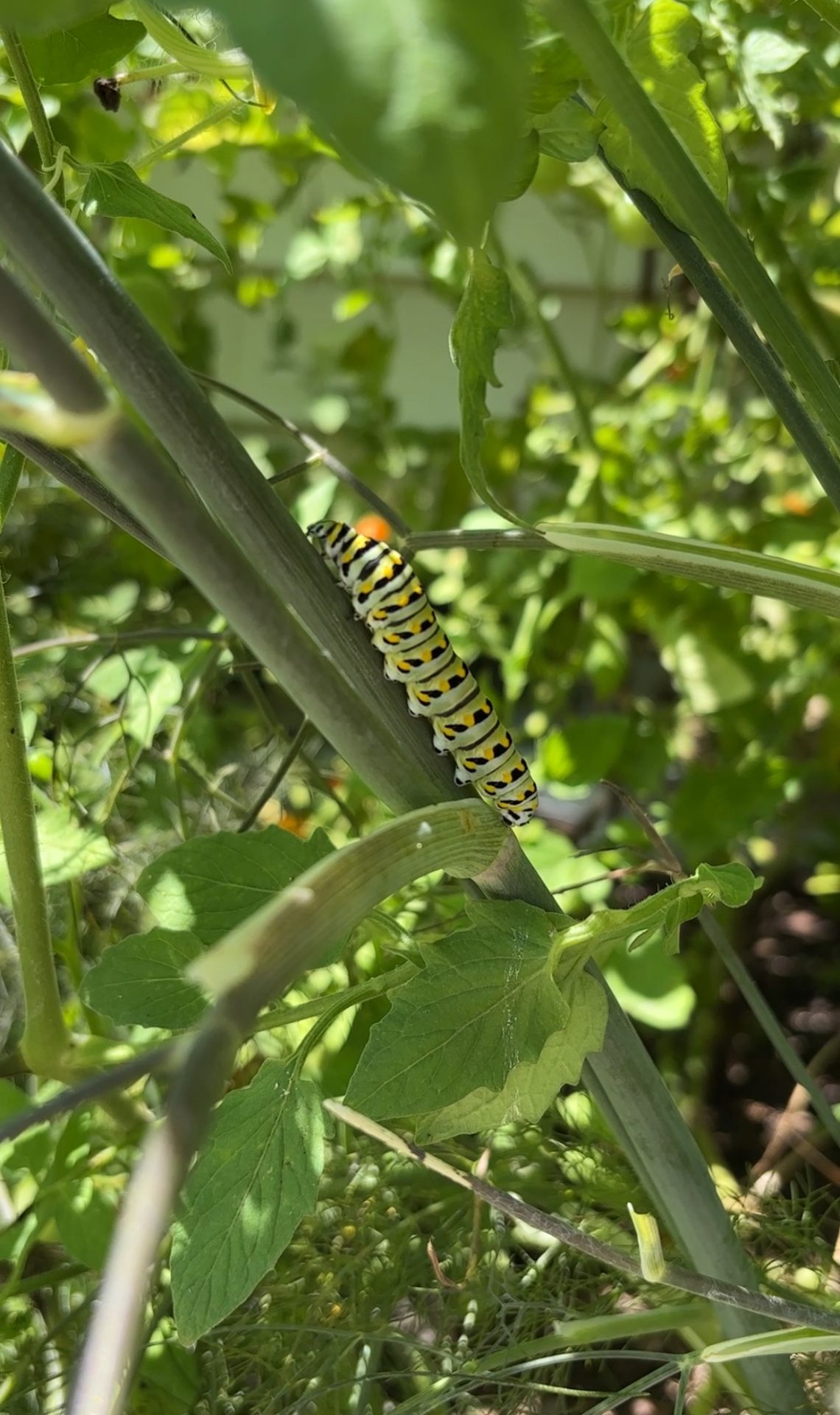

How to Create a Garden for Swallowtail Caterpillars
When we think about butterfly gardens, we usually picture colorful flowers covered in beautiful butterflies. But if you want to support butterflies throughout their entire life cycle, your garden needs to provide more than nectar—it needs to provide food for caterpillars, too!
Swallowtail butterflies are a wonderful addition to North Carolina gardens, and with the right host plants, you can create a space where they can lay eggs, caterpillars can feed, and new butterflies can eventually emerge.
What Do Swallowtail Caterpillars Eat?
Unlike adult butterflies, which feed on flower nectar, caterpillars need specific host plants to eat. Different swallowtail species use different plants, so adding a variety of host plants can attract more species to your garden.
For the eastern black swallowtail, some of the easiest host plants to grow are:
- Parsley
- Dill
- Fennel
- Carrot
- Parsnip
- Celery
These plants belong to the carrot family and are favorites of black swallowtail caterpillars.
For other swallowtails found in North Carolina, consider adding spicebush, sassafras, tulip poplar, pawpaw, or Dutchman’s pipe to your landscape. Spicebush swallowtail caterpillars, for example, feed primarily on spicebush, sweet bay, sassafras, and tulip poplar.
Don’t Be Alarmed When Your Plants Get Eaten!
One of the biggest challenges of creating a caterpillar garden is accepting that your plants may not look perfect.
That’s actually the point!
Swallowtail caterpillars need to eat, and older caterpillars can consume a significant amount of foliage as they mature. A little leaf damage is a sign that your garden is doing its job.
If you plant parsley or dill specifically for swallowtails, consider growing more than you need. You can harvest from some plants while leaving others available for caterpillars.
Skip the Pesticides
If you’re creating a garden for butterflies and caterpillars, pesticides can work against your goal.
Insecticides don’t distinguish between unwanted pests and beneficial insects, meaning caterpillars can be harmed or killed along with the insects you’re trying to attract. NC State Extension recommends avoiding pesticides when managing gardens for butterflies.
Instead, expect some natural feeding damage and allow caterpillars to complete their life cycle.
Add Flowers for the Adult Butterflies
While caterpillars need host plants, adult swallowtails need nectar.
Create a well-rounded butterfly garden by combining caterpillar host plants with nectar-producing flowers. Native plants such as Joe-Pye weed, coneflowers, asters, bee balm, and other butterfly-friendly flowers can help provide food throughout the growing season.
Planting flowers with different bloom times gives butterflies access to nectar from spring through fall.
Create a Safe Place to Grow
A successful butterfly garden doesn’t have to be perfectly manicured.
Leave some areas of the garden a little wild, provide shelter from strong winds, and consider adding flat stones where butterflies can bask in the sun. A shallow, damp area of soil or sand can also provide butterflies with a place to gather moisture and minerals.
Most importantly, give your caterpillar host plants room to grow without treating every bite mark as a problem.
Start Your Swallowtail Garden
If you’d like to bring more swallowtails into your garden, start with a few easy host plants such as parsley, dill, fennel, or native shrubs like spicebush. Then add nectar-rich flowers to provide food for the adults.
You may eventually notice tiny eggs, hungry caterpillars, and even a chrysalis tucked away in your garden. What might look like a few chewed leaves is actually evidence that your garden is supporting an entire butterfly life cycle.
Stop by For Garden’s Sake in Durham to find plants and supplies to create a garden that’s beautiful for you and beneficial to butterflies, too!
9197 NC Hwy 751 Durham, NC 27713 919 484 9759 #fgsdurham #fgslandscapes #okellychapelnc